By Sarwar A. Kashmeri
For the Valley News
Travel where you will in the Upper Valley, the topic of rising energy costs and what to do about them is a prime topic of conversation.
Alternative forms of energy, such as wind, solar, biomass and other nonfossil, renewable energy generators, are actively discussed but lead quickly to frustration for a number of reasons: The substantial cost to install even an entry-level systems (a reasonable solar system, for instance costs as much as an automobile); absence of adequate federal incentives; the absence of any incentives in New Hampshire and the marginal incentives that Vermont can afford; and environmental and aesthetic concerns.
All these crosscurrents were evident at a breakfast forum organized by the Upper Valley Computer and Information Industry Association at the Fireside Inn and Suites last week to discuss whether the Upper Valley can become energy independent.
Ably moderated by former state Sen. Matt Dunne, the panel of experts discussed renewable energy alternatives for the Upper Valley. At the end, however, they conceded that energy independence for a small and relatively sparsely populated area was not realistic. Participants left with a wealth of knowledge, however, and the UVCIA is to be commended for its effort to illuminate the complexity of this important issue.
As one small example of the complexities involved in alternative energy generators, one of the panelists discussed the installation of a residential water-turbine. Should you have a fast running stream on your property and your family has considered installing a water-turbine to generate electricity, you might want to will the installation to your grandchildren.
The permitting process involves a long list of permits, licenses and inspections by local, state, and federal officials to assess the impact of diverting the water on fish and other organisms, the impact on wildlife, the possibility of damaging a wetland that may be connected or fed by the stream miles downstream, and so on.
The stream that runs alongside our property in Reading, Vt., flows into a bigger water drain that later connects to the Connecticut River, which finally flows out into Long Island Sound. I shudder to even contemplate the layers of permits we would have to get to use that stream for power generation.
No, it is not easy to contribute to controlling global warming.
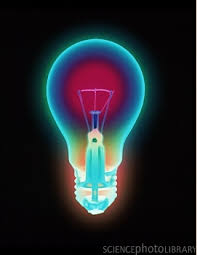
So it was with some excitement that I learned about the European Union's decision last week to replace every energy-inefficient incandescent bulb in Europe with fluorescent lamps by 2009. An incandescent bulb (the ones in general use throughout America and the rest of the world) con verts less than 5 percent of the energy it uses to light, and is little changed from the time Edison invented it in 1879. The EU's decision will save Europeans more than $9.2 billion a year in electricity costs and cut out about 25 million tons of carbon-dioxide emissions to boot. It is an idea that can be put into place with existing technology combined with a healthy dose of political and business leadership.
The reason fluorescent light bulbs have failed to gain traction with consumers is mainly because of their cost, even though they are cheaper to operate and last longer. But their price is bound to decrease as the European market responds to a demand for billions of the new light bulbs annually.
The success of the EU switchover seems assured because all the manufacturers of light bulbs support the change. It turns out that one of these manufacturers is United States-based General Electric. So here is an idea for the Upper Valley's energy and environmental champions: Why not start a movement to convince New Hampshire and Vermont business and political leaders to hitch a ride on the European juggernaut and replace all of the Upper Valley's incandescent light bulbs by -- let’s give ourselves one more year -- by 2010 and then extend the project to the rest of both states.
A rough calculation tells me that there are something like 14 million incandescent lamps in use throughout the Twin States. Assuming the Upper Valley has a third of these, that is around 5 million lamps. A drop in the sea compared with the estimated 3.2 billion inefficient lamps that are plugged into the EU's grid.
If New Hampshire and Vermont followed in the EU's footsteps, using the savings estimates developed by the EU, the Twin States would save about $34 million annually in electricity costs (Upper Valley estimated savings: $11 million), and reduce carbon dioxide emissions by some 90,000 tons, with the Upper Valley's emissions dropping by 30,000 tons.
Vermont and New Hampshire already have a sizeable commercial relationship with the EU. The two states' exports to Europe exceed $1 billion, and EU investment in both states is around $8 billion, which supports more than 30,000 jobs. The light bulb project would add more depth to these business links and expand the regional economy.
Brussels starts putting together an impact switchover assessment review in May. Perhaps a Twin State business-government delegation could be sent to the EU to use that assessment as a template. That would provide the governors and legislative leaders of both states with hard numbers to quantify the costs and benefits of adopting the European idea.
As a regional organization that is supported by business and nonprofit groups throughout the Upper Valley, the UVCIA seems ideally suited to act as a catalyst to jump-start this initiative. What do you think?
***
Sarwar Kashmeri is the author of the recently released book: America & Europe After 9/11 and Iraq: The Great Divide. He is a fellow of the Foreign Policy Association, a strategic communications adviser, and lives in Reading, Vt. Your comments may be posted on the Business Climate blog: http://www.sakbizcol/ .blogspot.com
For the Valley News
Travel where you will in the Upper Valley, the topic of rising energy costs and what to do about them is a prime topic of conversation.
Alternative forms of energy, such as wind, solar, biomass and other nonfossil, renewable energy generators, are actively discussed but lead quickly to frustration for a number of reasons: The substantial cost to install even an entry-level systems (a reasonable solar system, for instance costs as much as an automobile); absence of adequate federal incentives; the absence of any incentives in New Hampshire and the marginal incentives that Vermont can afford; and environmental and aesthetic concerns.
All these crosscurrents were evident at a breakfast forum organized by the Upper Valley Computer and Information Industry Association at the Fireside Inn and Suites last week to discuss whether the Upper Valley can become energy independent.
Ably moderated by former state Sen. Matt Dunne, the panel of experts discussed renewable energy alternatives for the Upper Valley. At the end, however, they conceded that energy independence for a small and relatively sparsely populated area was not realistic. Participants left with a wealth of knowledge, however, and the UVCIA is to be commended for its effort to illuminate the complexity of this important issue.
As one small example of the complexities involved in alternative energy generators, one of the panelists discussed the installation of a residential water-turbine. Should you have a fast running stream on your property and your family has considered installing a water-turbine to generate electricity, you might want to will the installation to your grandchildren.
The permitting process involves a long list of permits, licenses and inspections by local, state, and federal officials to assess the impact of diverting the water on fish and other organisms, the impact on wildlife, the possibility of damaging a wetland that may be connected or fed by the stream miles downstream, and so on.
The stream that runs alongside our property in Reading, Vt., flows into a bigger water drain that later connects to the Connecticut River, which finally flows out into Long Island Sound. I shudder to even contemplate the layers of permits we would have to get to use that stream for power generation.
No, it is not easy to contribute to controlling global warming.
So it was with some excitement that I learned about the European Union's decision last week to replace every energy-inefficient incandescent bulb in Europe with fluorescent lamps by 2009. An incandescent bulb (the ones in general use throughout America and the rest of the world) con
 verts less than 5 percent of the energy it uses to light, and is little changed from the time Edison invented it in 1879. The EU's decision will save Europeans more than $9.2 billion a year in electricity costs and cut out about 25 million tons of carbon-dioxide emissions to boot. It is an idea that can be put into place with existing technology combined with a healthy dose of political and business leadership.
The reason fluorescent light bulbs have failed to gain traction with consumers is mainly because of their cost, even though they are cheaper to operate and last longer. But their price is bound to decrease as the European market responds to a demand for billions of the new light bulbs annually.
The success of the EU switchover seems assured because all the manufacturers of light bulbs support the change. It turns out that one of these manufacturers is United States-based General Electric. So here is an idea for the Upper Valley's energy and environmental champions: Why not start a movement to convince New Hampshire and Vermont business and political leaders to hitch a ride on the European juggernaut and replace all of the Upper Valley's incandescent light bulbs by -- let’s give ourselves one more year -- by 2010 and then extend the project to the rest of both states.
A rough calculation tells me that there are something like 14 million incandescent lamps in use throughout the Twin States. Assuming the Upper Valley has a third of these, that is around 5 million lamps. A drop in the sea compared with the estimated 3.2 billion inefficient lamps that are plugged into the EU's grid.
If New Hampshire and Vermont followed in the EU's footsteps, using the savings estimates developed by the EU, the Twin States would save about $34 million annually in electricity costs (Upper Valley estimated savings: $11 million), and reduce carbon dioxide emissions by some 90,000 tons, with the Upper Valley's emissions dropping by 30,000 tons.
Vermont and New Hampshire already have a sizeable commercial relationship with the EU. The two states' exports to Europe exceed $1 billion, and EU investment in both states is around $8 billion, which supports more than 30,000 jobs. The light bulb project would add more depth to these business links and expand the regional economy.
Brussels starts putting together an impact switchover assessment review in May. Perhaps a Twin State business-government delegation could be sent to the EU to use that assessment as a template. That would provide the governors and legislative leaders of both states with hard numbers to quantify the costs and benefits of adopting the European idea.
As a regional organization that is supported by business and nonprofit groups throughout the Upper Valley, the UVCIA seems ideally suited to act as a catalyst to jump-start this initiative. What do you think?
***
Sarwar Kashmeri is the author of the recently released book: America & Europe After 9/11 and Iraq: The Great Divide. He is a fellow of the Foreign Policy Association, a strategic communications adviser, and lives in Reading, Vt. Your comments may be posted on the Business Climate blog: http://www.sakbizcol/ .blogspot.com